Retail Demand Forecasting Software
Maximize margins and accelerate revenue with automated, elasticity-based pricing decisions. Scale your retail strategy without the manual guesswork.

Drive Quantifiable Margin and Revenue Gains
+3pp
gross margin improvement
+5%
revenue uplift on optimized SKUs
+25%
in inventory productivity (GMROI)
*Results will vary based on category context and customer circumstances
Stop Planning Demand by Spreadsheets
Move from reactive inventory decisions to AI-driven demand forecasting built for modern retail operations.
Demand Is Assumed — Not Forecasted
In many retail teams, demand planning is still:
- Based on last year’s sales
- Adjusted manually in Excel
- Influenced by intuition from buyers
- Updated only after stock problems appear
As a result, companies do not systematically evaluate:
- True SKU-level demand
- Seasonal demand patterns
- Promotion uplift
- Channel-specific demand behavior
- Store-level demand variability
Retailers are not forecasting demand — they are reacting to it.
- Based on last year’s sales
- Adjusted manually in Excel
- Influenced by intuition from buyers
- Updated only after stock problems appear
As a result, companies do not systematically evaluate:
- True SKU-level demand
- Seasonal demand patterns
- Promotion uplift
- Channel-specific demand behavior
- Store-level demand variability
Retailers are not forecasting demand — they are reacting to it.
No Visibility into Future Sales
Without a demand forecasting system:
- Buyers cannot predict upcoming demand changes
- Replenishment is triggered too late
- Promotions are planned without volume expectations
- Supply chain teams operate blindly
Critical questions remain unanswered:
- What will actually sell next week?
- How much inventory should we order?
- Which stores will run out first?
- How will promotions affect demand?
Decisions are made — but future sales remain uncertain.
- Buyers cannot predict upcoming demand changes
- Replenishment is triggered too late
- Promotions are planned without volume expectations
- Supply chain teams operate blindly
Critical questions remain unanswered:
- What will actually sell next week?
- How much inventory should we order?
- Which stores will run out first?
- How will promotions affect demand?
Decisions are made — but future sales remain uncertain.
Overstock and Stockouts Come from the Same Problem
Poor forecasting causes two opposite failures at once:
- High-demand items go out of stock
- Slow-moving items accumulate in warehouses
Without predictive demand modeling:
- Working capital is frozen in inventory
- Lost sales increase
-Replenishment becomes reactive
- Safety stock is inflated
The issue is not inventory management.
The issue is demand visibility.
- High-demand items go out of stock
- Slow-moving items accumulate in warehouses
Without predictive demand modeling:
- Working capital is frozen in inventory
- Lost sales increase
-Replenishment becomes reactive
- Safety stock is inflated
The issue is not inventory management.
The issue is demand visibility.
From Raw Sales Data to Accurate Demand Forecasts in 3 Steps
Step
1
Connect Your Retail Data
Sales history, inventory levels, promotions, seasonality, and store attributes — unified in one forecasting workspace.
System automatically consolidates:
● POS transactions
● historical sales
● stock levels
● promotions & markdowns
● store and channel differences
The platform creates a single demand signal across all locations and channels.
System automatically consolidates:
● POS transactions
● historical sales
● stock levels
● promotions & markdowns
● store and channel differences
The platform creates a single demand signal across all locations and channels.
Step
2
Predict Future Demand
AI models forecast expected sales at SKU, store, and channel level.
The system analyzes:
● seasonality patterns
● demand trends
● promotion uplift
● new product behavior
● substitution effects
Instead of extrapolating last year’s sales, retailers receive a forward-looking demand forecast.
The system analyzes:
● seasonality patterns
● demand trends
● promotion uplift
● new product behavior
● substitution effects
Instead of extrapolating last year’s sales, retailers receive a forward-looking demand forecast.
Step
3
Plan Inventory & Replenishment
Turn demand forecasts into actionable supply decisions.
Retail teams can:
● calculate order quantities
● set replenishment cycles
● allocate inventory across stores
● prepare for demand peaks
● avoid stockouts and overstocks
Forecasts become operational decisions — not just reports.
Retail teams can:
● calculate order quantities
● set replenishment cycles
● allocate inventory across stores
● prepare for demand peaks
● avoid stockouts and overstocks
Forecasts become operational decisions — not just reports.
Start for Free

Advanced Capabilities for Retail Demand Planning Teams
AI-powered demand forecasting and inventory planning — without manual analysis, spreadsheets, or complex modeling.
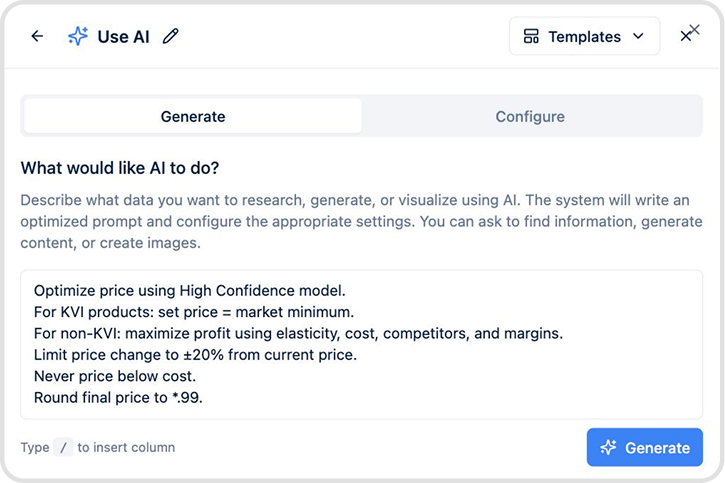
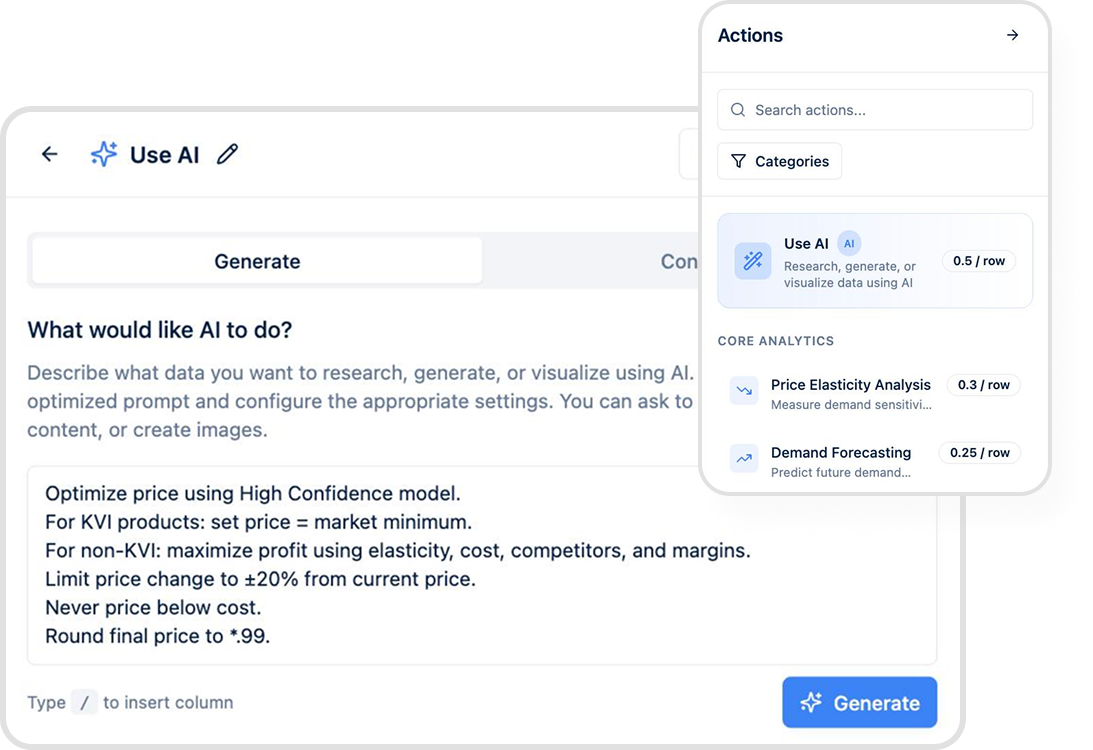
RetailGrid generates the column instantly — with clear, AI-powered results.

Instant Insights
Need Retail Demand Insights? Just Ask
No formulas. No manual calculations. No forecasting models to build.
Type a question and receive actionable answers:
Type a question and receive actionable answers:

«Predict sales for next 4 weeks»
«Which products will run out of stock?»
«How will promotion affect demand?»
«Expected demand by store»
Retail teams get operational decisions — not just analytics.
Demand Forecasting & Sales Prediction Insights
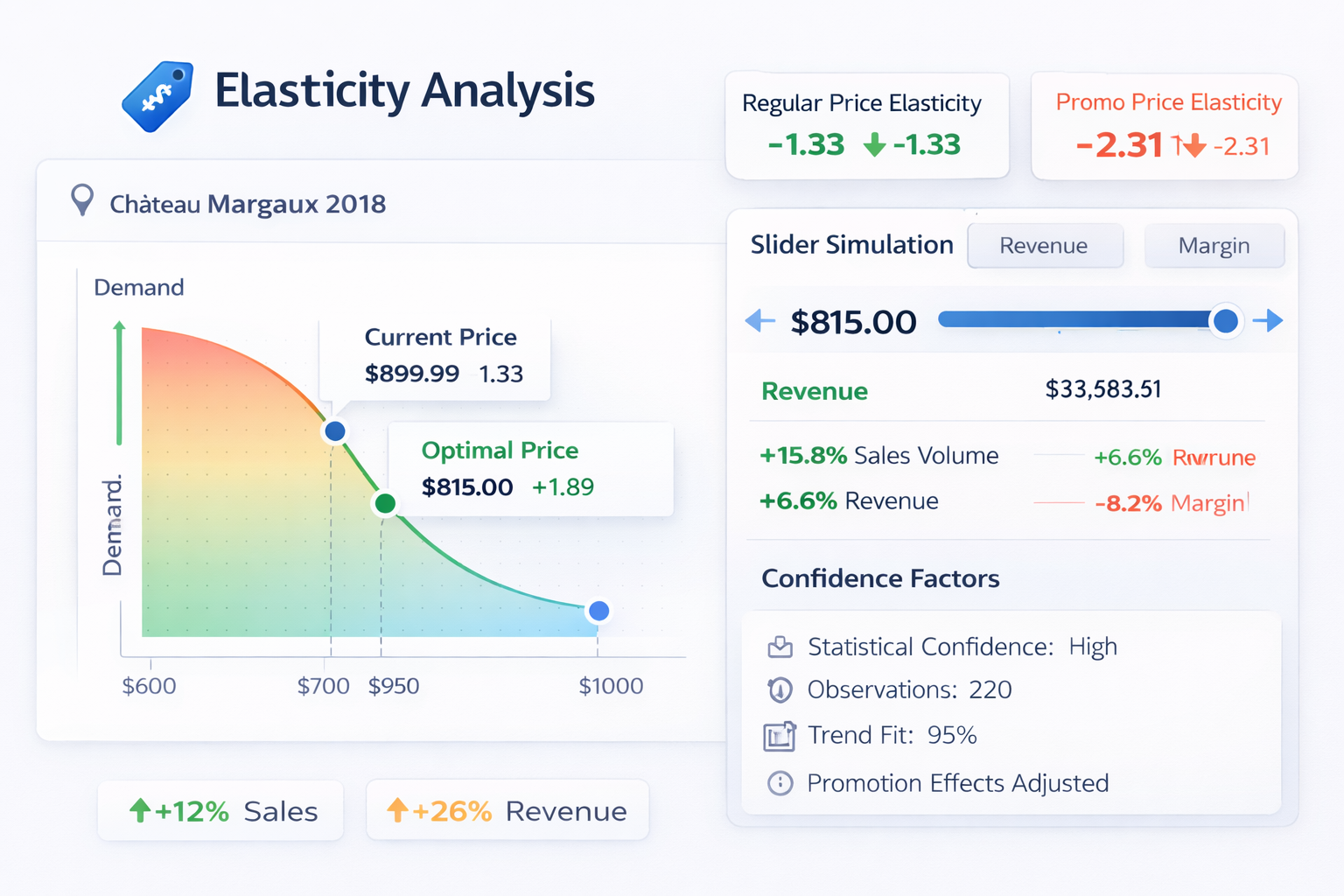
Stop reacting to past sales. RetailGrid predicts future demand automatically — by SKU, store, and channel.
AI Analytics
AI Demand Forecasting
Stop guessing future sales. RetailGrid automatically predicts demand behavior across assortment and locations.
Examples:
Examples:
“Predict sales for next 4 weeks”
“Which products will run out of stock?”
“Expected demand by store”
“How will promotion affect sales volume?”
Retailers receive operational planning decisions — not retrospective reports.

Limitless Clarity
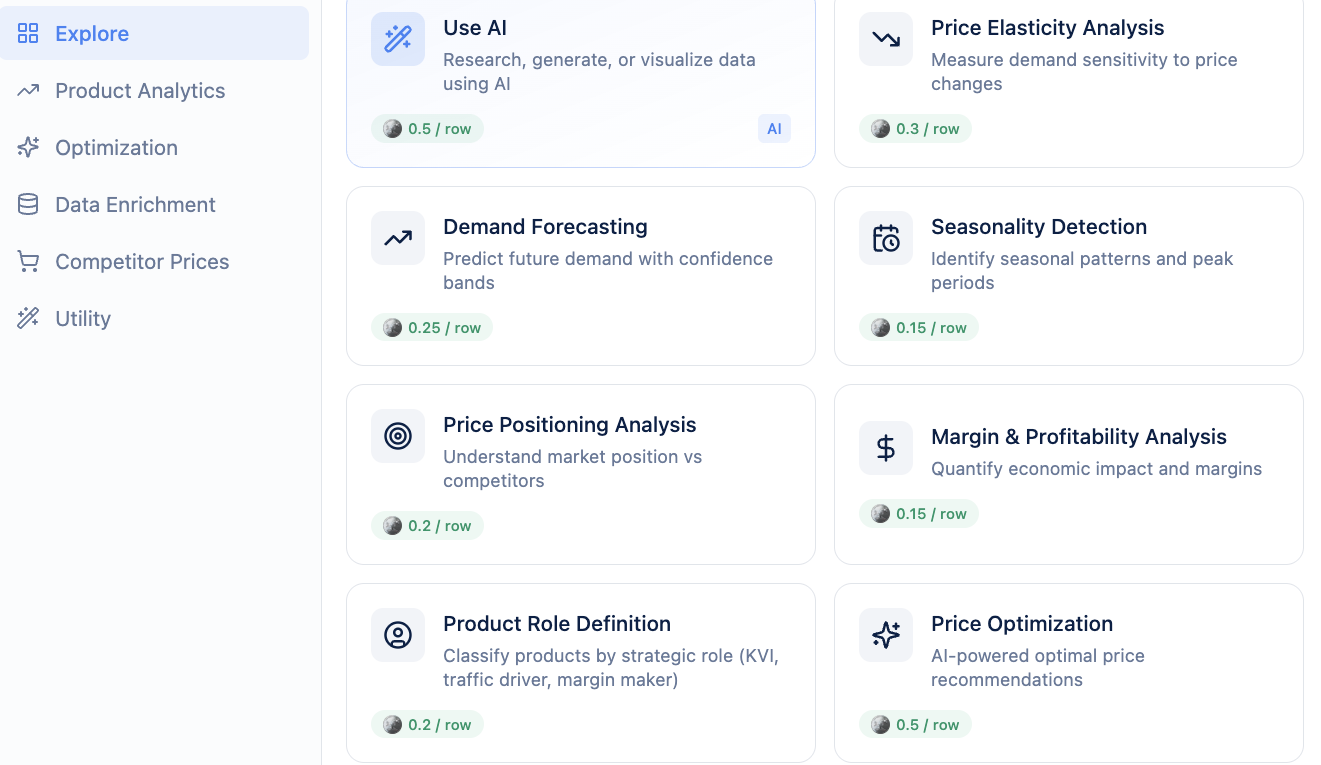
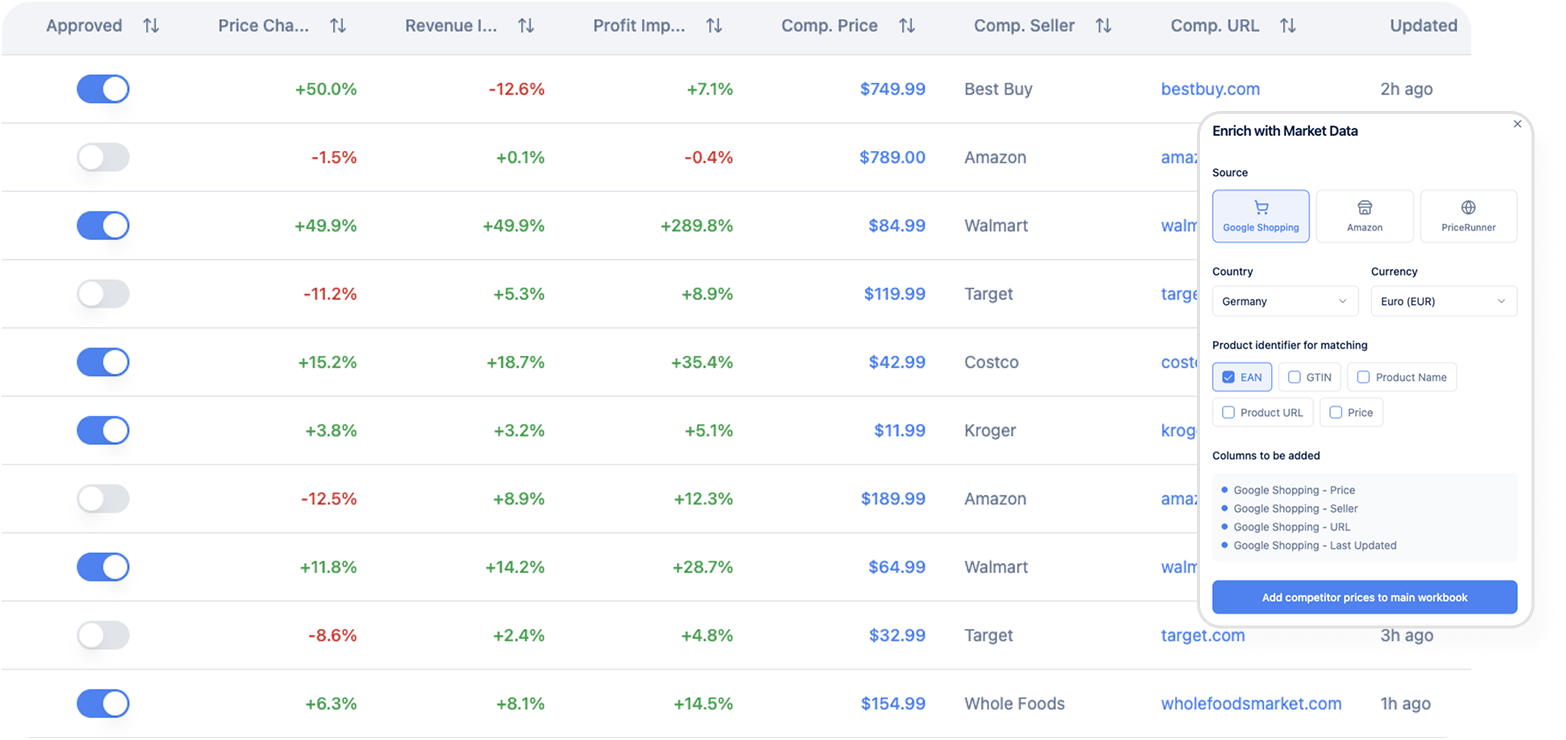
One workbook. Multiple Actions. Unlimited insight.

Product Analytics

Optimization

Data Enrichment


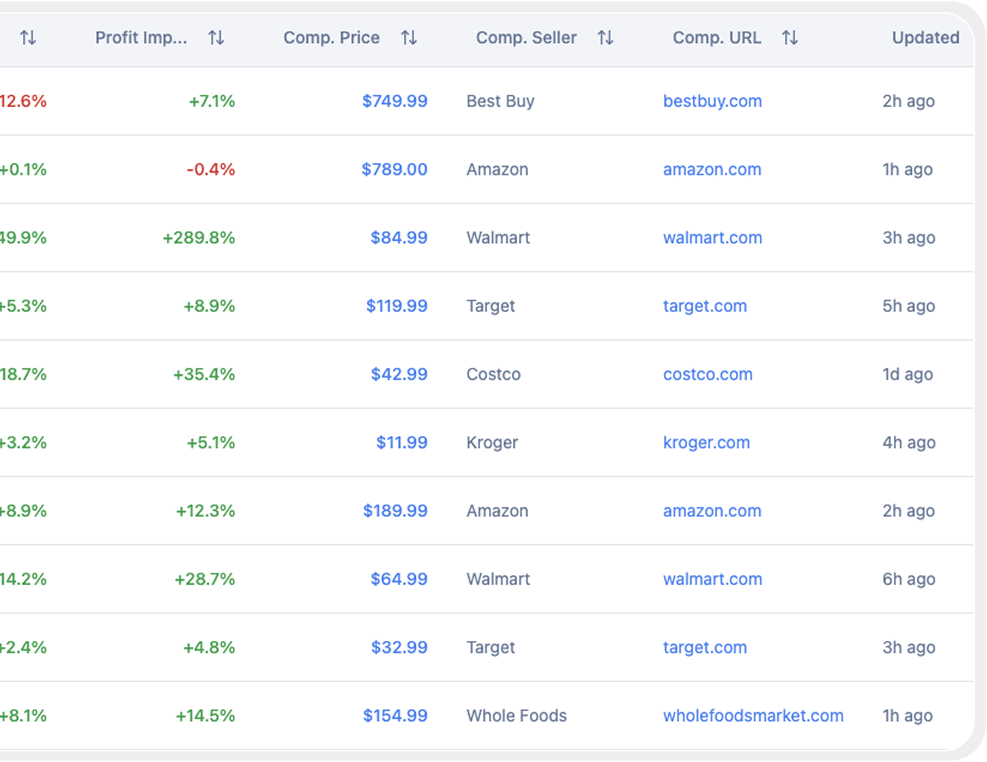


Total Data Power
Accurate Forecasts Require Complete Demand Data
RetailGrid combines internal sales signals and external demand drivers to predict future product demand across stores and channels.
Demand signals RetailGrid uses:
Demand signals RetailGrid uses:

Historical POS sales

Promotions and markdowns
Seasonality patterns

Store attributes and location differences

Product lifecycle stage
External demand signals
Instead of relying only on past sales, the system builds a real predictive demand model.
No IT required
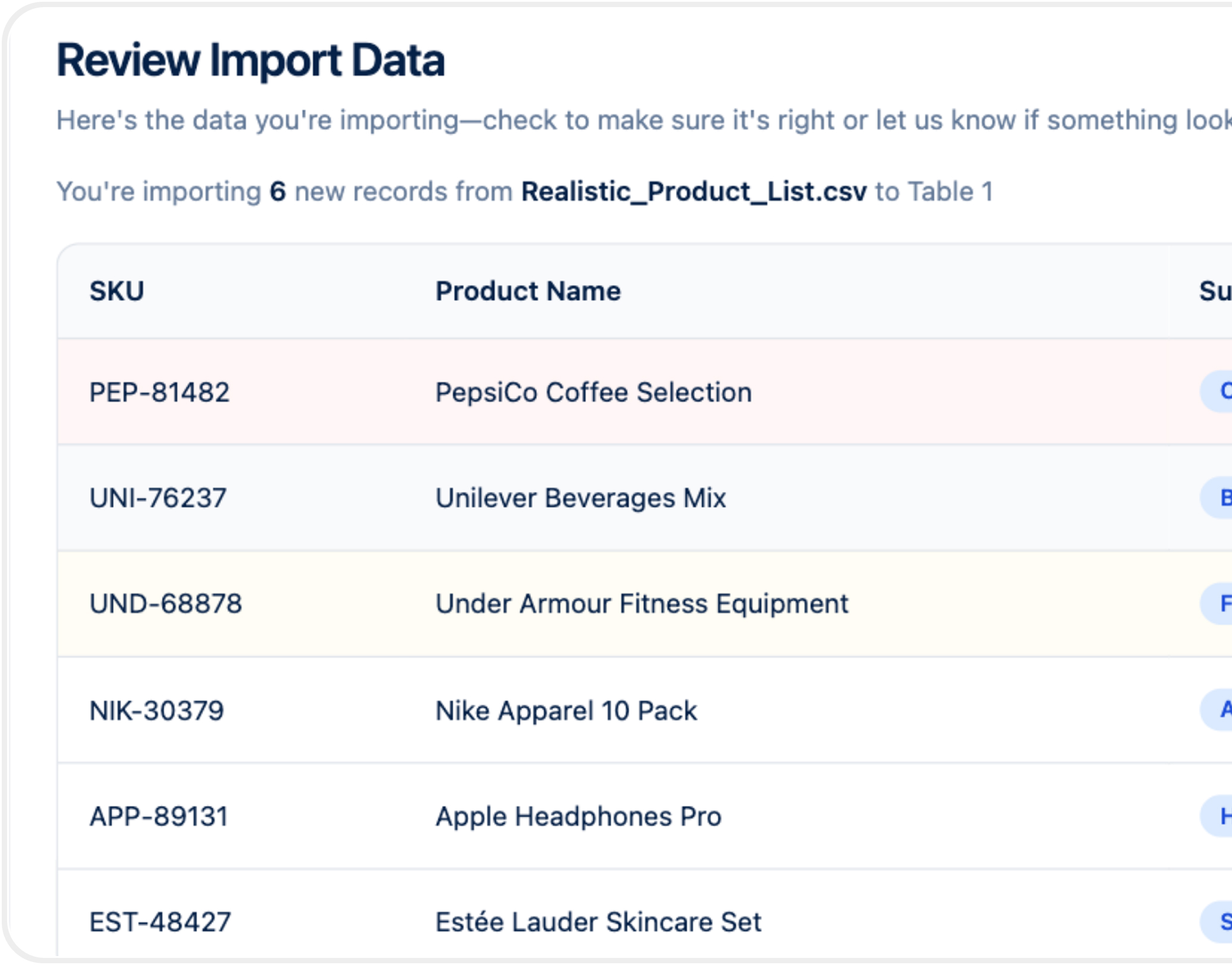
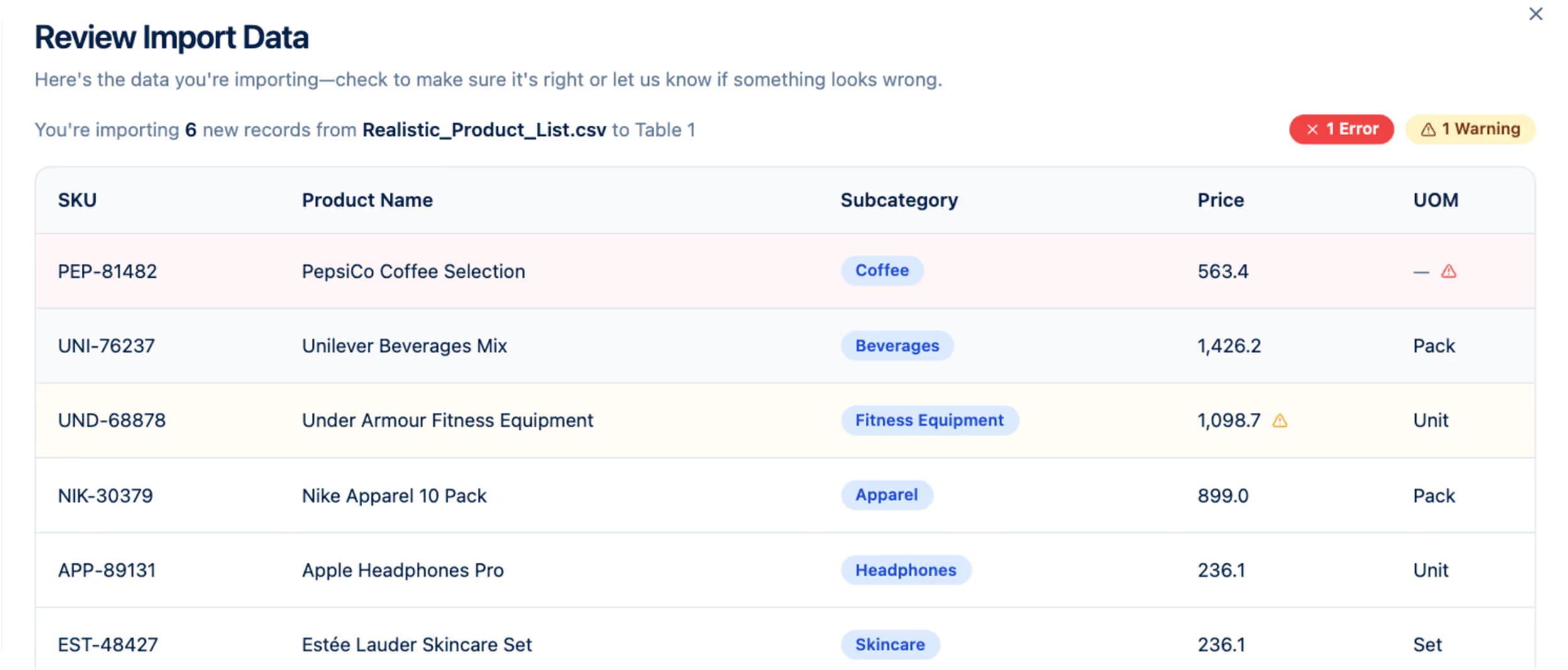
Connect Your Retail Data and Start Forecasting Immediately
You can start forecasting using:

POS and transaction history

Inventory and stock levels

Promotion and markdown calendars

Store and location attributes

eCommerce sales channels
The platform automatically prepares the data and builds a demand model.


Demand Planning Solutions Built for Retail Operations
For Retailers
AI-powered demand forecasting for merchandising and inventory planning teams.
RetailGrid helps retailers predict future sales across stores, channels, and assortments — and plan purchasing and replenishment accordingly.
Instead of reacting to stockouts or excess inventory, teams can align buying decisions with expected demand..
Who uses it:
● Demand Planning Managers
● Merchandising Teams
● Category Managers
● Inventory & Replenishment Managers
● Supply Chain Planners
RetailGrid helps retailers predict future sales across stores, channels, and assortments — and plan purchasing and replenishment accordingly.
Instead of reacting to stockouts or excess inventory, teams can align buying decisions with expected demand..
Who uses it:
● Demand Planning Managers
● Merchandising Teams
● Category Managers
● Inventory & Replenishment Managers
● Supply Chain Planners
For Brands & Suppliers
Forecast product demand across retail partners and sales channels.
RetailGrid allows brands to anticipate retailer demand, prepare production, and coordinate distribution using forward-looking sales predictions.
Brands gain visibility into expected sell-through instead of relying only on shipment history. Control your pricing performance across markets and channels.Take full control of your pricing across multiple regions and channels.
Who uses it:
● Sales Planning Teams
● Trade Marketing Managers
● Supply Chain Managers
● Distribution & Operations Leads
● Key Account Managers
RetailGrid allows brands to anticipate retailer demand, prepare production, and coordinate distribution using forward-looking sales predictions.
Brands gain visibility into expected sell-through instead of relying only on shipment history. Control your pricing performance across markets and channels.Take full control of your pricing across multiple regions and channels.
Who uses it:
● Sales Planning Teams
● Trade Marketing Managers
● Supply Chain Managers
● Distribution & Operations Leads
● Key Account Managers
Demand forecasting connects sales expectations with purchasing, production, and inventory decisions.
Retail Demand Forecasting Software FAQs
What is retail demand forecasting software and how does it work?

How is demand forecasting different from simple sales reporting?
How accurate are AI demand forecasts?
Can the system forecast demand for new products?
Does demand forecasting help prevent stockouts and overstocks?
Can I forecast demand separately by store or channel?
Is the system a “black box,” or can planners understand the forecast?
How quickly can we start using the forecasts?
Featured resources


March 14, 2026
Understanding Retail Merchandising Analytics: How Data Improves Product Placement and Sales
Retail merchandising analytics explained: key metrics, insights, and use cases to improve product placement, assortment, and sales performance.
Read

March 14, 2026
Retail price optimization: how data turns pricing into a strategy
Retail price optimization explained: strategies, models, and tools to optimize prices, improve margins, and grow revenue in modern retail.
Read