
Pricing
Pricing — Optimize Every Price, At Scale
AI-driven price optimization powered by real data,constraints, and business rules.

Pricing built on real retail complexity

Data
Sales
Competitors
Costs

Logic
Constraints
Rules
Strategy

AI Models
Elasticity
Optimization
Forecasting
Data + Logic + AI → converge into one pricing engine
How Pricing Works

Step 1
Demand Modeling
SKU elasticity (highconfidence)
Category / cluster fallback
Competitive signals
Step 2
Optimization
Profit / revenue goals
Price constraints
Business rules

Step 2
Exploration
Controlled price testing
Small adjustments (±2–5%)
Confidence-based strategy

Step 4
Learning Loop
Collect results
Update models
Reduce uncertainty
Key Features

Elasticity Modeling
Estimate demand sensitivity per product
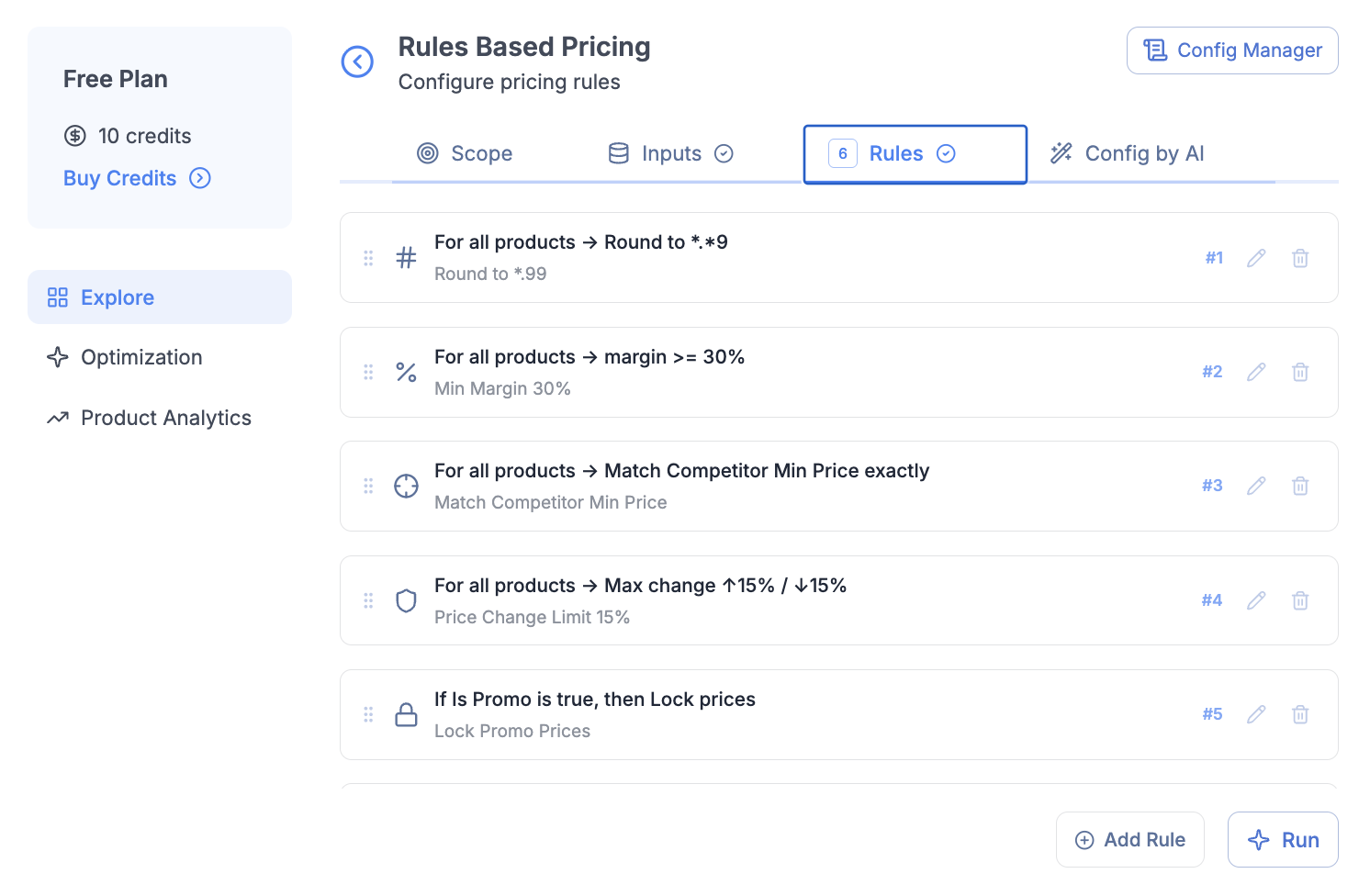
Rule-based Constraints
Full control over pricing boundaries
Optimization Engine
Find the best price automatically

Competitor Integration
Always aligned with the market
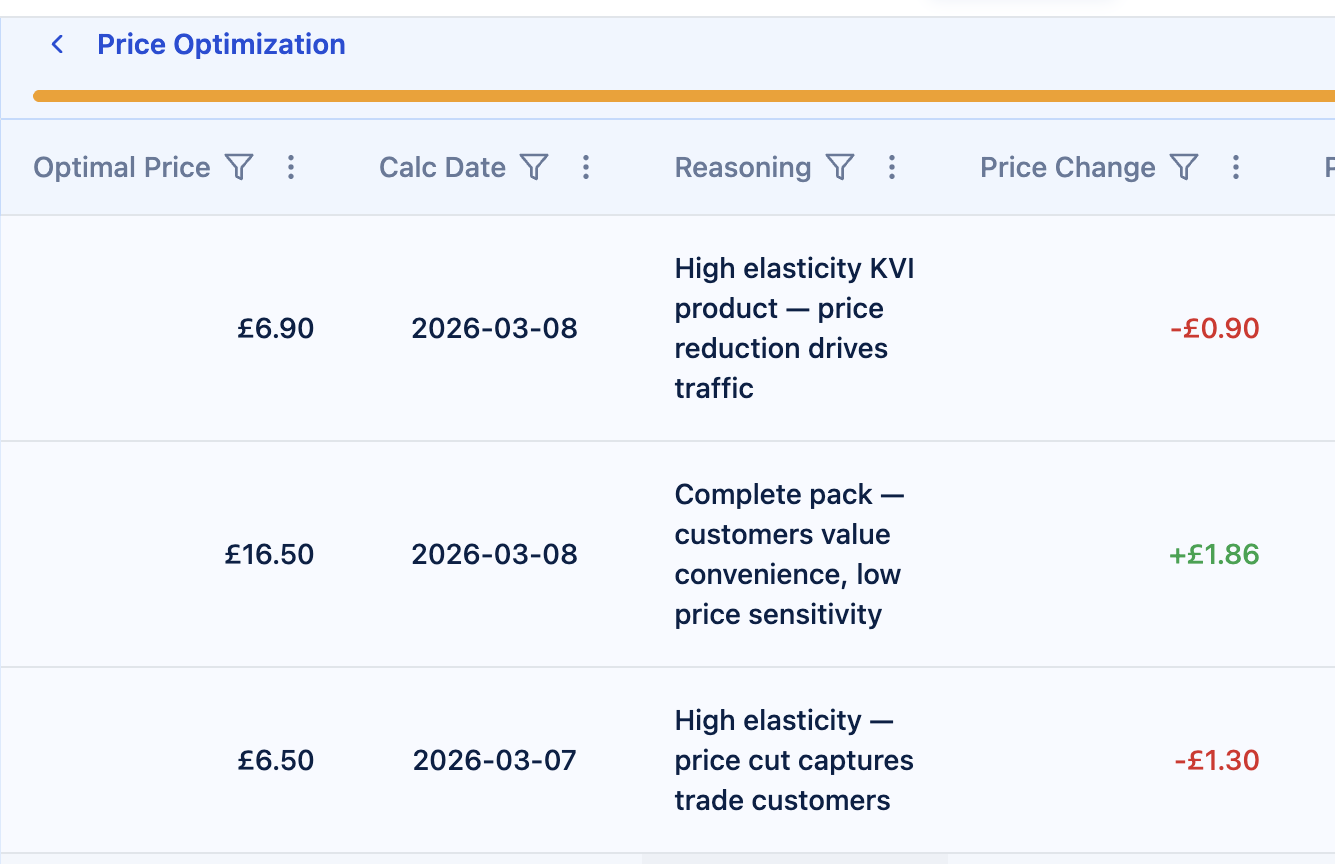
AI Recommendations
Clear, explainable price suggestions

Works Inside AI Grid
Pricing where your data lives
Pricing Strategies
Choose your approach. Combine rules and AI to match your business goals.

Margin Protection
Conservative
Min margin: 5%
Limit price decrease
Priority: protect margin
Priority: margin > competitiveness

Competitive Matching
Balanced
Match competitor price ±2%
Keep margin above threshold
Priority: market position
Priority: competitiveness

Aggressive Growth
Aggressive
Undercut competitors
Allow margin compression
Test elasticity
Priority: volume > margin

Profit Optimization
AI driven
Maximize profit curve
Use elasticity
Ignore competitors if needed
Priority: maximize profit curve
From Analysis → Action
Before

Spreadsheets
Manual updates
Slow decisions
After

Automated recommendations
Controlled execution
Continuous optimization
Stop guessing prices. Start optimizing them.
Book a Live Demo

