Competitor price tracking that lands where you actually price.
Most competitor price tracking software stops at the dashboard. Retailgrid wires competitor prices, marketplace data, and DTC feeds straight into the grid where your team sets rules and approves price changes - so the loop from competitor signal to applied price is hours, not days.
The data sources you need. Mapped. Refreshed. In the grid.
Three capabilities that turn competitor price monitoring from a passive report into an active input to pricing decisions.
From raw competitor feed to ranked actions.
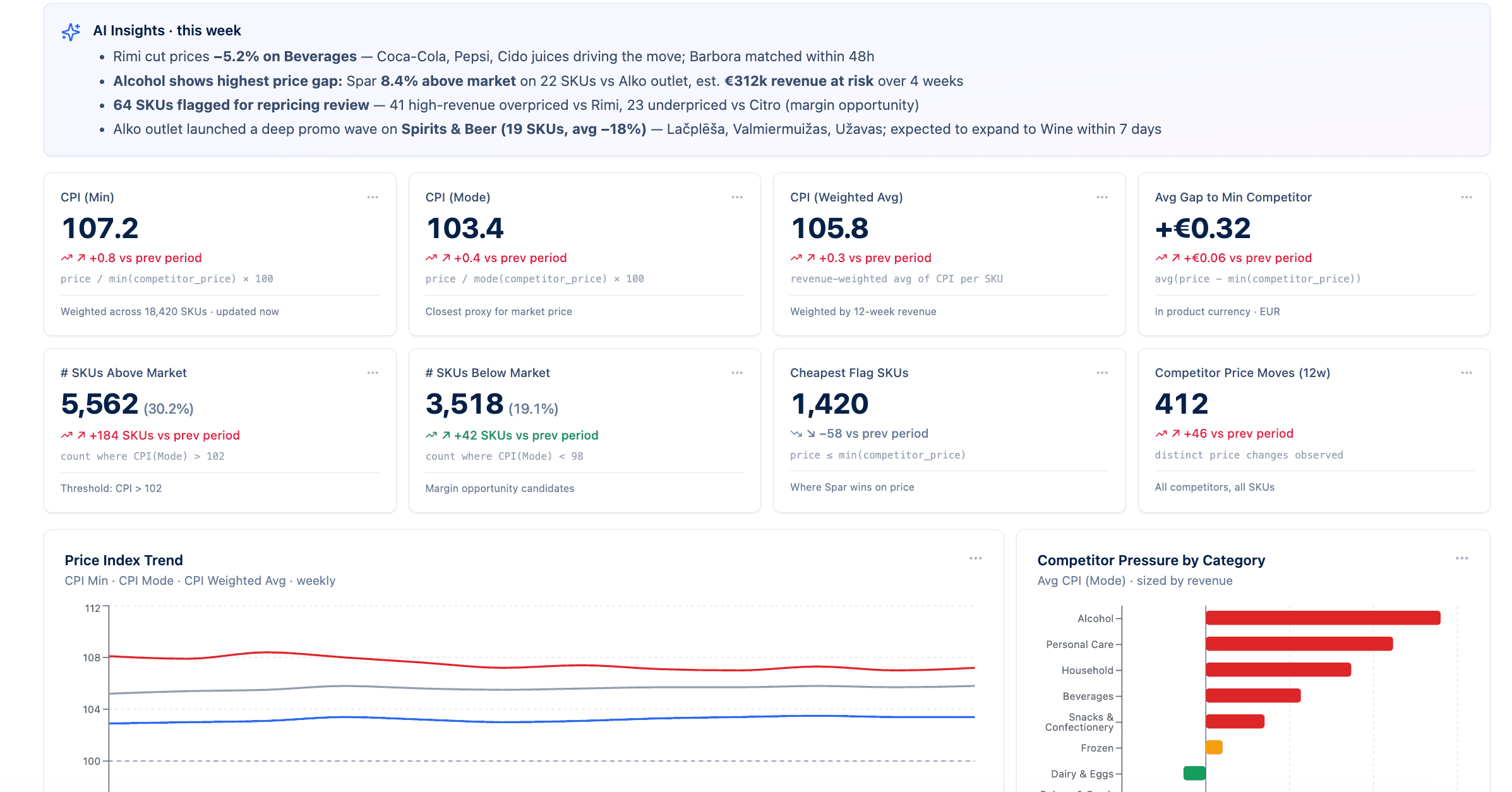
Monitor critical KPIs at a glance.
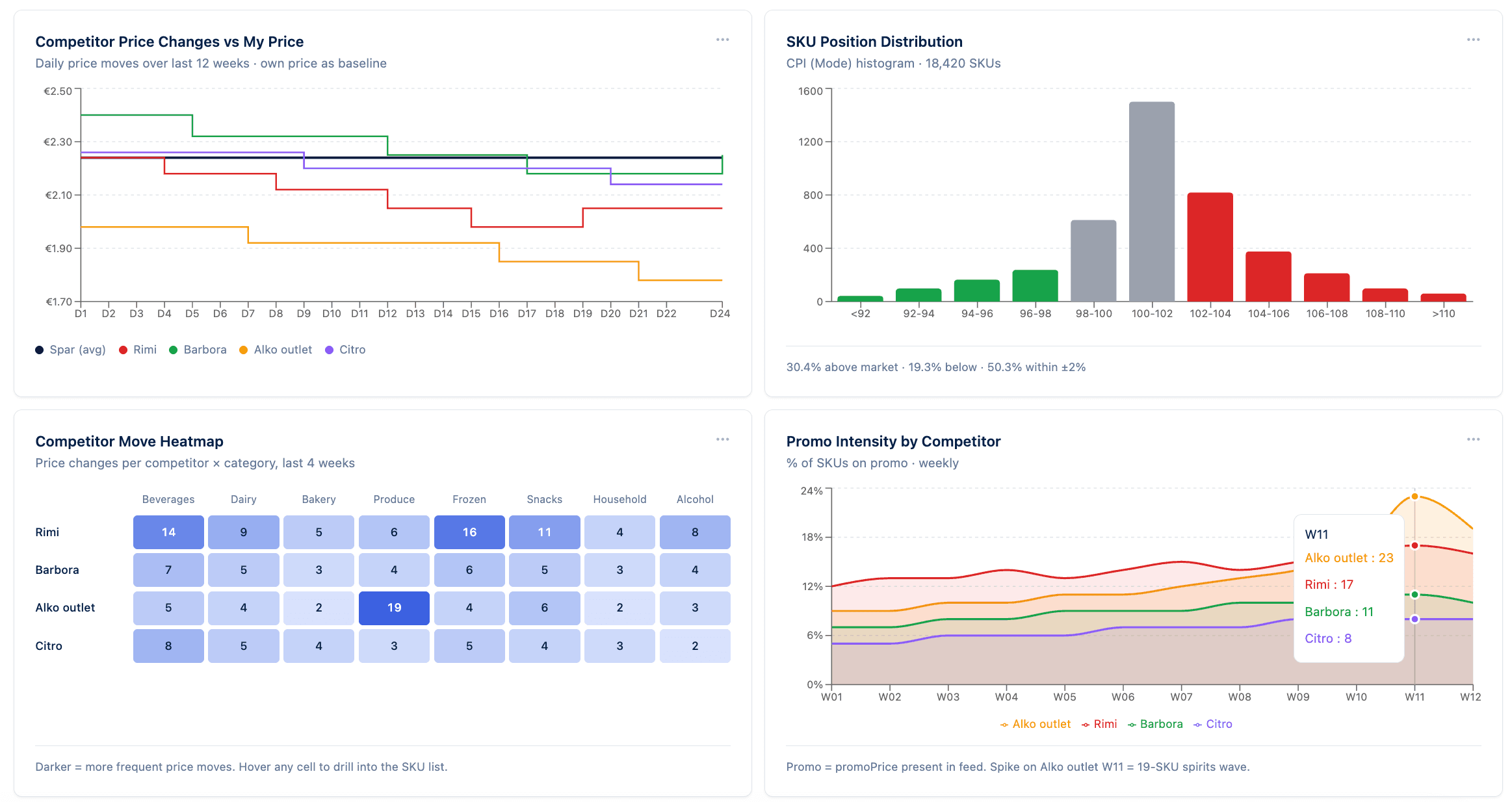
- Position distribution at a glance - share of SKUs above, below, and within market
- Daily competitor price moves overlaid on your own price as the baseline
- Promo intensity tracked weekly per competitor and category
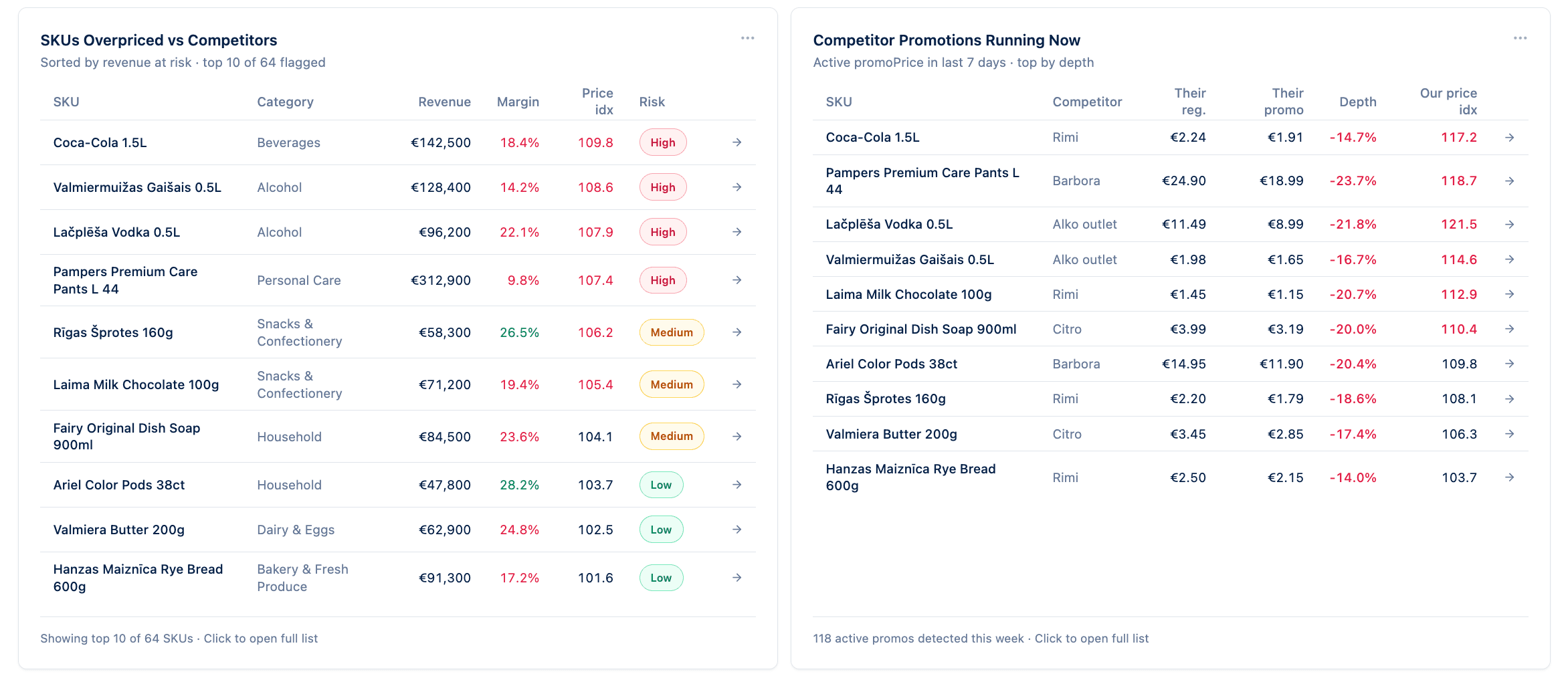
Surface the SKUs at risk. Right now.
- Overpriced SKUs ranked by revenue at risk, with margin and price-index inline
- Active competitor promotions with discount depth and the gap to close
- Click through to open the SKU in the workspace and act
Crawlers, marketplaces, partners - all in one feed.
- Own web crawling infrastructure for DTC sites and category portals
- Marketplace APIs: Amazon SP-API, eBay, bol., ManoMano, eMag, more
- Public data partners: PriceRunner, Idealo, Google Shopping
Auto-mapping that doesn't need a 3-month project.
- GTIN-first matching where barcodes exist
- Attribute matching for non-GTIN catalogs (brand, model, variant)
- Match-confidence scoring with one-click manual review on edge cases
Price history that's actually queryable.
- Per-SKU price history with 4-hour resolution
- Competitor-vs-yours overlay charts in the workspace
- Push to BigQuery, Snowflake, or your warehouse of choice
From competitor signal to applied price change.
Most competitor price tracking tools end at the dashboard. Retailgrid's monitoring is the input to the agentic pricing engine - so the data has somewhere to go.
Configure sources
Pick the marketplaces, partners, and DTC competitors you care about. Retailgrid starts crawling and mapping competitor SKUs to yours automatically - most catalogs map in hours, not weeks.
Define alerts and rules
Set MAP thresholds, price gap alerts, and out-of-position triggers. Wire them into the agentic pricing rules - so a competitor move can fire a price change automatically.
Monitor, decide, act
Competitor data lives in the same grid as your prices and rules. Alerts route to Slack, email, or the approval queue. Every action - manual or auto - is logged against the signal that triggered it.
The monitoring layer that doesn't need a separate vendor.
Most retailers run pricing on three vendors: price tracking software, a rules engine, and a BI dashboard. Retailgrid replaces all three - so the data flows from signal to action without a CSV in between.